
Inclusive Language: How To Use and Promote It at Your Organization
Pre-Blog Redesign
|

download now: free company culture code template
what is inclusive language?
inclusive language is the words and phrases you use that avoid biases, slang, and expressions that discriminate against groups of people based on race, gender, socioeconomic status, and ability. when used, you can resonate with more audiences by speaking and writing in ways that everyone understands and makes everyone feel welcome.
to explore how you might promote inclusive language at your organization, i spoke with some experts at hubspot who have first-hand knowledge of incorporating inclusive language into their processes, products, and overall team culture.
for instance, hannah fleishman, who led the charge on updating hubspot's careers website to be more inclusive, told me, "language has a big impact on our sense of belonging in the workplace. the challenge is, language is nuanced. the changes we should consider making to how we talk and write are often subtle."
melissa obleada, an associate user experience researcher at hubspot, echoes this thought, mentioning, "many of us don't realize that our language has additional meaning hidden between the lines. certain words can imply a certain age, gender, educational background, social class, and so much more. we see this a lot in the ways many folks write job descriptions."
consider, for instance, the last time you were in a meeting and a leader said, "okay, guys, let's get started" — do you think that automatically made female colleagues feel a little less-welcomed than their male peers? would it have been better if he'd said "ya'll" or "everyone"?
alternatively, imagine you're hiring a new person on your team and your boss tells you, "we're looking for a good culture fit." you know most people on your team are extraverted -- does that make you unfairly biased during interviews as you seek out a "good culture fit" by looking for candidates that mirror your colleagues' personality type?
beth dunn, marketing fellow at hubspot, wrote a medium piece on the topic of instilling a human voice in product content, and said, "try not to present the privileged, tech-savvy, wealthy, able-bodied, white, cisgendered, anglo-centric male experience as 'standard' and everything else as 'other' or 'diverse.' seek ways to place the 'other' in the center of things instead."
additionally, dunn told me, "what's great is that the english language is such a flexible, expressive language, so there are all sorts of ways to say what you need to say without indicating anything that might be exclusive. it just takes a little imagination, empathy, and practice, that's all."
take job descriptions as an example — you might've heard by now that women only apply for jobs when they feel they've met 100% of the requirements, while men will apply when they feel they've met 60% of them.
fleishman suggests, "try to avoid writing job descriptions with unattainable requirements. using more inclusive language can be like building a new muscle; you need to get in the habit of recognizing nuances and asking yourself if what you're saying, or writing, is accessible for everyone."
obleada adds that it's not just job descriptions that you should edit for inclusivity — it's all communication, whether through email, slack, text, facebook, or in-person: "when it comes to implementing inclusive language, it takes practice to shift your typical ways of speaking and writing."
to monitor whether your communication is exclusive to certain groups, you'll want to look at resources and tools online. for instance, textio is an augmented writing tool that identifies whether you're using gendered language in your writing or words with a strong feminine or masculine association. this can be undeniably helpful for both job descriptions and even emails to colleagues.
additionally, you might consider taking a look at the conscious style guide, a resource on conscious language that breaks down exclusive language into categories, including age and disability.
finally, to identify your own implicit biases, try taking a hidden bias test, like this one created by psychologists at harvard, the university of virginia, and the university of washington, to uncover how your biases might be inhibiting you from expressing yourself more inclusively.
if this all sounds like a lot of work to you, it's important to note — this isn't just about creating a more inclusive environment at work. it's also critical for your company's bottom line, particularly if you work for a global company or plan to expand your offerings to other regions in the future.
obleada explains it like this: "for some, writing and speaking inclusively may feel like a restrictive set of rules, hindering instead of helping us. in reality, it's just the opposite."
"inclusive language opens up and amplifies your message to more people, making your blog post, job description, or website copy more accessible than before."
next, let's explore some inclusive language examples in-practice.
inclusive language examples
- avoid company or team acronyms.
- use plain language in your writing rather than expressions or jargon.
- refer to a theoretical person as 'they' instead of 'he' or 'she'.
- ensure your company's designs or images reflect a diverse group of people.
- be mindful of terms related to race, ethnicity, nationality, and culture.
- when speaking to colleagues about family, use gender-neutral labels for family members.
- be mindful of medical conditions and ability terms.
- when in doubt, ask individuals which pronouns they prefer (but make it clear they can choose not to identify, as well).
1. avoid company or team acronyms.
fleishman told me, "acronyms have become part of most companies' vocabulary, but they can be alienating for new employees, candidates, or global teams."
i personally remember how frustrated i felt when i first joined my team at hubspot and everyone kept saying "tl;dr" in meetings. i was too embarrassed to ask what it meant. i finally googled the term, but in the interim, the acronym made me feel separate from the larger group.
while this is a small and innocent example, there might be bigger acronyms you use every day within your team that continue to alienate new members or employees from other teams. and if your company does choose to use specific acronyms (like, in hubspot's case, h.e.a.r.t.), make sure you explain what it means during the employee onboarding process.
2. use plain language in your writing rather than expressions or jargon.
many of us use colloquial expressions every day. for instance, i often say, "it's just a ballpark figure" or "it should be a piece of cake," without pausing to consider whether the listener knows or has heard the term before.
of course, this can be confusing to other parts of the world that aren’t familiar with such expressions. if your company has global offices or works with customers from across the globe, expressions that are common to you can pose a major deterrent to clear communication.
for instance, in dunn's medium article, she writes, "we also avoid using metaphors (visual and written) that are specific to just one culture or class. so, for instance, we avoid using phrases like 'knock it out of the park' or 'hit a home run,’ even though these phrases are pretty common in north america as they’re just not going to resonate outside of the u.s. not because people will be offended by a reference to baseball, but because they won’t be as familiar, so the meaning won’t be as clear."
the graphic below displays examples of colloquial words and phrases and plain language alternatives to ensure everyone understands you.

3. refer to a theoretical person as "they" instead of "he" or "she."
as marketers, we're exceptional storytellers. sometimes, however, whether you're talking offhandedly with a colleague or delivering a pitch, you might get caught up in using pronouns that unintentionally support stereotypes.
for instance, let's say you're giving a pitch and you say, "we've found through analysis that our readers are typically in a vp position or higher, which is why we believe we should lean into linkedin as a strategy in 2020. for instance, let's say our reader needs to deliver a presentation. he might turn to our blog ahead of time, but more likely, he'll turn to linkedin first."
your fictitious vp-level reader doesn't need to be "male" or "female" -- why not call them by the non-gendered pronoun "they,” "them,” or "their"? you can still make your point, and you won't alienate people on your team who feel hurt that you've assumed that leaders are likely male.
this also relates to gendered terms that add nouns to the end of them, like salesman. opting for a more inclusive term could be saying salesperson or sales rep. the image below shows additional examples of gendered terms and alternative phrases to use.

4. ensure your company's designs or images reflect a diverse group of people.
when potential customers take a look at your website, you want them to see people (or figures) that look like them. simultaneously, you want potential new hires to see themselves reflected.
otherwise, you're likely missing out on both potential customers, and future employees for your company.
in her medium post, dunn writes, "our product illustrators try to ensure that the people we represent in illustrations are diverse in appearance, and that these different types of people are represented doing many different things (for instance, a person of color doing the talking while others listen, a woman in a wheelchair at an executive desk, etc.)."
as you scale as a company, you want to ensure your marketing materials reflect as many groups of people as possible. otherwise, you're unintentionally sending messages to people who don't see themselves in your content that your brand "isn't quite right for them."
5. be mindful of terms related to race, ethnicity, nationality, and culture.
many terms used daily have roots in racism and discrimination, so using them can make people feel unsafe, whether in your marketing materials or day-to-day correspondence with team members.
some regularly used terms have roots in racism and discrimination or are taken from celebrations and sacred practices of marginalized communities. using them in your marketing materials or day-to-day correspondence with team members can make people feel unsafe and unwelcome.
for example, pow wow is often used informally to describe a meeting or get-together. using it in such a way disregards pow wows as indigenous cultures’ sacred rituals and social gatherings — ceremonial events that have nothing to do with work. a simple alternative is saying stand-up, meeting, or hang-out.
the image below displays other examples of words commonly used that are related to ethnicity, race, nationality, and culture that you can easily swap out for more inclusive terms.

6. when speaking to colleagues about family, use gender-neutral labels for family members.
obleada told me, "inclusive language has a real impact on how 'themselves' folks feel they can be in a given space. as a queer woman, it makes me cringe when folks ask me about a boyfriend. intentionally using gender neutral titles — parent, spouse, partner, child, etc. — when speaking about your or others' families can make a big difference in how comfortable someone may feel."
rather than making assumptions, approach conversations with colleagues using gender neutral titles. for instance, it's better to use "parent" or "guardian" when making conversation with a colleague since "mom" or "dad" excludes family structures such as grandparents as caregivers, same-sex parents, etc.
7. be mindful of medical conditions and ability terms.
common phrases like “turning a blind eye” are ableist and insensitive to people whose lives are impacted by medical conditions.
while likely used innocently, someone who hears such a phrase in the workplace or sees it in your marketing materials may feel unsafe and like you don’t represent them or what they care about.
it’s best practice not to use such terms unless they’re relevant to your topic of conversation. the image below displays commonly used phrases that can be harmful that you might not have realized before and alternatives to implement.

8. when in doubt, ask individuals which pronouns they prefer (but make it clear they can choose not to identify, as well).
it's critical to note — there's no one-size-fits-all "right" and "wrong" when it comes to language. many people have personal preferences, especially when it comes to identity.
for instance, person-first language (i.e., "people with autism") was introduced because many feel it's dehumanizing to put the disability or gender orientation first, as it seems to define the individual.
however, some prefer identity-first language (i.e., "autistic people") since they accept autism as an inherent part of their identity — identity-first language can even help evoke a sense of pride among individuals.
(for more information on person-first or identity-first, take a look at this article by the autistic self advocacy network.)
over to you
it's critical you avoid applying hard-and-fast rules to all individuals, since these preferences are incredibly personal. you might consider asking them what they prefer, or offering up your own preferred pronouns to create a safe space for them to do the same — but only if they feel comfortable doing so. (to learn more about etiquette when it comes to asking pronoun preference, take a look at gender neutral pronouns: what they are & how to use them.)
ultimately, it's important to remember none of us will get it "perfect" 100% of the time, but admitting when you've made mistakes and consistently working to communicate more inclusively are two major steps towards creating a more unified workforce, and creating deeper connections with your customers.
remember — inclusive language is about widening your message and allowing it to resonate with as many people as possible, so it's critical for your business's bottom-line that you do everything you can to communicate more inclusively every day.


originally published jun 21, 2022 7:00:00 am, updated june 21 2022
15 of the Best Women@INBOUND Quotes to Inspire You Today
Pre-Blog Redesign
|
inbound is a key milestone for professionals in industries spanning across marketing, sales, customer success, revenue operations, and more.
for women's history month, the inbound team is excited to highlight some of the most impactful quotes from the incredibly talented women who have graced our stages over the past 10 years.
providing opportunities that go beyond having a seat at the table to actually having a voice is how we will continue to transform the future of business.
let's dive in.
click here to register for inbound 2022
15 inspirational quotes from past inbound women speakers
1. "fail is the f word for business. if failure is not an option, neither is success." — beth comstock, advisor & author
2. "it is human emotion that drives all of our decision making. it's what drives us to be our best selves." — bozoma st. john, chief marketing officer, netflix
3. "vulnerability is the birthplace of innovation, creativity, and change." — brené brown, professor, author, podcast host
4. "maybe it's not about getting the part. it's about forging your own path through the wilderness. you chart a different course." — brit marling, actress
5. "i define talent in a particular way, i don't look for polish as much as i look for promise." — chimamanda ngozi adichie, writer

6. "ignorance, at this point, can only be willful." — emily chang, executive producer, bloomberg technology
7. "it is the quality of our relationships that determines the quality of our lives."— esther perel, psychotherapist
8. "your best mentors are your peers, because you will rise together." — joanna coles, former chief content officer, hearst magazines
9. "nothing great has ever come out of a lot of easy days." — leila janah, ceo of samasource
10. "don't ask if your dream is crazy, ask if it's crazy enough." — lena waithe, actress
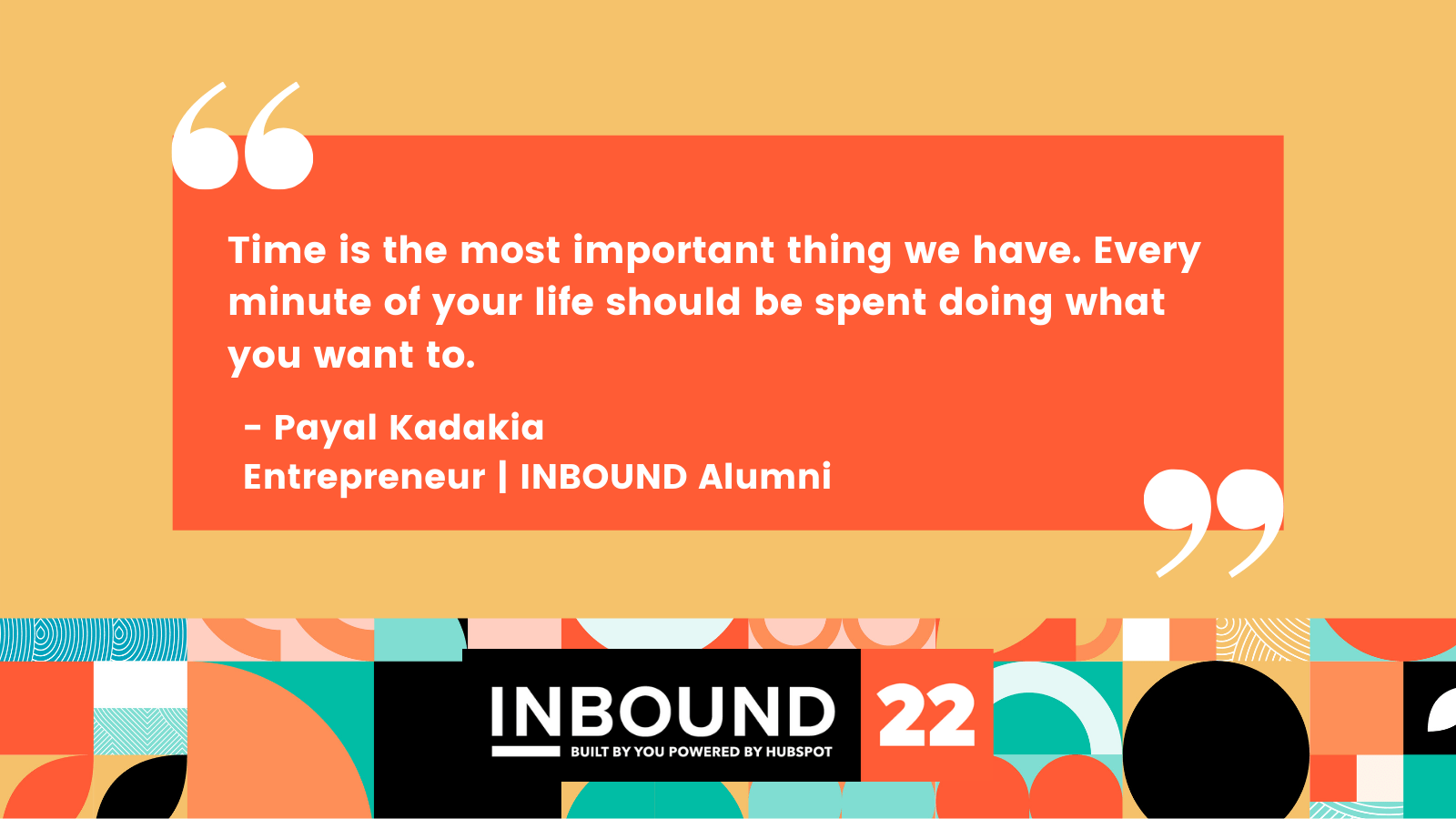
11. "time is the most important thing we have. every minute of your life should be spent doing what you want to." — payal kadakia, entrepreneur

12. "what's the point of being a woman in power if you can't help women in power?" — shonda rhimes, television producer, screenwriter, author
13. "you don't have to lower your standards. there are people who share your values and have the skills to do the job well, you just need to take the time to look for them." — tarana burke, american activist
14. "if i were to give one piece of business advice to my younger self it would be respect your workers and fight for change." — judith heumann, american disability rights activist
15. "start before you're ready. no idea is ever going to be 100% perfect, the timing is never going to be 100% right, i'm a big believer that if you jump in and get started, you'll find your way and if you start today, imagine where you could be in just one year." — sarah paiji yoo, founder/ceo of blueland


originally published mar 15, 2022 7:00:00 am, updated march 15 2022
How Conversion Funnels Create a Better Customer Journey + How to Optimize Yours
Pre-Blog Redesign
|
download now: free customer journey map templates
in this post, i'll explain what conversion funnels are and how they impact your customer journey. then, you'll learn how to optimize your funnel to increase the number of people who make it to your conversion point at the bottom.
what is a conversion funnel?
a conversion funnel, sometimes called a sales funnel, is a term used to describe the different stages of the buyer’s journey potential customers go through before they take the desired action (i.e., convert). as a salesperson, you guide people through the funnel in order to convert them from potential buyers into customers.
all leads begin at the top of the funnel. as they learn more about your business, they move down and get closer to purchasing your product or service. this conversion process is called a funnel because companies often have more leads than they do customers, making the top of the funnel a larger pool of people than the bottom.
understanding how people flow through your conversion funnel is essential to being an effective marketer or salesperson because it helps you engage leads, answer questions about your business, and address concerns. it also lets you organize leads into categories and create customer touchpoints that can entice each group to convert.
that's why every funnel should be designed for how your customers buy, not how you sell. the focus is on providing such a great experience within the customer journey that you convince them to convert.
before diving into the details of how to analyze and optimize your funnel, we need to talk about an important aspect of this process: the customer journey.
customer journey
the customer journey complements the conversion funnel, but it's not the same thing. unlike the generalized, linear conversion funnel, customer journey maps show the individual and circuitous paths people take from the moment they discover your brand to the time they make a purchase.
let's say you're a food blogger who sells cookbooks. here's how your customers' journeys can differ.
-
customer a sees and clicks on your banner ad, visits your blog, reads an article, signs up for your newsletter, gets a discount email, and purchases a cookbook.
-
customer b sees your cookbook in a bookshop, buys it, makes the recipes, visits your blog, and subscribes to your newsletter.
the outcomes for customer a and b are essentially the same, but the journeys and touchpoints are different. so if you know the different ways people enter your funnel, you can optimize for those entry points. that way, you can meet potential buyers where they are and entice them to convert.
that said, most funnels have similar points that ultimately lead to conversion. let’s take a closer look at each stage of this process.
conversion funnel stages
the top-middle-bottom funnel is a classic model used by sales teams, which focuses on sparking interest, informing potential customers, convincing them to purchase, and building loyalty so they become repeat buyers.
traditional conversion funnel stages
-
top of the funnel (tofu): this is the awareness phase. a potential customer enters the tofu when they engage with your brand, oftentimes through your website, an ad, an email, or social media.
-
middle of the funnel (mofu): this is the consideration phase. the potential customer knows about your brand and engages with it in order to learn more. they may sign up for your email newsletter, follow you on social media, or download guides and templates.
-
bottom of the funnel (bofu): this is the conversion phase. a prospect is here right before they purchase, which means you've given them good information and relevant touchpoints. help them convert by making it easy to purchase, offering a trial, outlining pricing, or sending a discount for their abandoned shopping cart.
let’s see what this looks like visually in the examples below.
conversion funnel examples
hubspot started off with the traditional conversion funnel structure, using marketing efforts to serve as the top of the funnel. those leads were then passed further down the funnel to the sales team.
while some conversion funnels are simple, others can be incredibly complex. there are several conversion models you can use to suit your business needs, ranging from a simple three-stage funnel for smaller operations to complex, multi-stage sales funnels for enterprise-level companies. let’s explore some of the most common models.
three-stage marketing funnel

-
awareness: get visitors to your website. attract them with quality blog posts or through social media.
-
consideration: use that great content to entice your new visitors to sign up for your newsletter.
-
conversion: now that prospects are familiar with your brand, persuade them to make a purchase by offering a discount code for first-time buyers.
aida funnel
 sometimes called a “purchase funnel,” the aida model expands on the basic three-stage structure.
-
attention: in addition to blog posts and social media, you can use targeted ads to draw visitors to your website.
-
interest: pique the prospect’s interest in your product by showcasing the goods. use case studies to show how your product has helped other businesses. have notable press mentions? you’ll want to showcase those as well.
-
desire: your prospects like you, now you must make them want you. gain their trust and create an emotional connection. continue to serve them content that helps them visualize how your product would fit into their lives and why they need it.
-
action: now’s your chance to get them to convert. one way is to offer a free ebook, trial, or tool that’s only accessible if they fill out a form with their contact information. if your goal is to get them to purchase a product, you could give them a promotional offer to persuade them to buy.
the detail of your funnel depends on your sales process — the longer your sales cycle, the more complex your funnel. if you have a short sales cycle, your funnel tends to be simpler.
think about how long it takes to sell $2,000 b2b software versus a $20 t-shirt. the software purchase usually requires months of sales calls, marketing materials, faqs, and demos. each of those is a specific point in your conversion funnel. but potential buyers may only need five minutes to figure out that the t-shirt is the right color and fit before purchasing. the touchpoints required here are taking it off the rack and trying it on.
to figure out how complex your funnel is, you can look at the data and perform an analysis. this will help you flush out each part of your customer journey to create a unique visual representation of your funnel.
conversion funnel analysis
funnels are full of barriers and friction. analyzing your funnel helps you visualize the flow of potential customers across each point.
you can see key traffic sources and high-exit pages to get a feel for how people end up in each stage of the funnel.
it's also a way to discover barriers that cause people to leave a page before they convert. if you see a high drop-off rate on one page, for example, you'll know to prioritize that as you work toward optimizing your funnel.
to understand your funnel, follow these steps for in-depth analysis:
1. look for high-traffic pages with high drop-off and conversion rates.
high-traffic pages hold a plethora of useful information. not only are these the pages people see the most, but they're also where people decide to stay or go. look at the pages where people drop off (aka leave) and where they convert (take your intended action). some metrics to collect are:
- cost per acquisition (cpa)
- customer lifetime value (clv)
- drop-off rate
- conversion rate
- number of marketing qualified leads (mqls)
- mqls to customer conversion rate
- conversion rate per channel (i.e., social, email, and paid search)
2. discover where your best customers come from.
not all leads are the same. some people drop off near the top of the funnel while others make it all the way down. that's why tracking leads is so important. when you know where your high-quality leads come from, you can analyze that touchpoint or channel to see what you're doing right. ask yourself:
- how is this touchpoint different from other touchpoints?
- what information is resonating with people?
- what are the barriers or friction (if any)?
- how many steps do people have to go through before converting?
identifying what you're doing right in your funnel is just as important as figuring out what you're doing wrong. if you need help digging into the data, check out these sales funnel tools or look into heatmap and session recording tools for information on how people navigate your pages.
3. create an optimization plan.
after you figure out where people are dropping off and converting, it's time to make an optimization plan. this should include the goals you want to focus on (i.e., more leads, newsletter signups, demos, or software purchases).
goals let you determine what you want from each touchpoint within your funnel so you can measure whether it's working or not.
after your funnel analysis, you'll have a list of priority touchpoints that need to be optimized. make sure to focus on the areas with the biggest drop-off rates first.
conversion funnel optimization
every part of your conversion funnel can be optimized to increase the number of people who turn into customers. think of conversation funnel optimization as finding out what motivates, blocks, and persuades people so you can give them the best experience possible on their unique journey.
to optimize effectively, you need to think about how to give each customer what they want at each phase of the funnel. using the phases outlined above, here's what to consider at each step along the customer journey.
1. tofu: awareness
issues at the top of your funnel? take a look at how you attract new leads. compare every channel that brings in customers (i.e., social media, search engines, your blog, and paid ads) to see which attracts the most people.
if you're unsure how customers found you, send out a survey to ask. look for trends in how people find new brands and put more effort into your best channels. just make sure you're attracting the people in your target audience.
2. mofu: consideration
potential customers made it to the middle of your funnel, but it's your job to keep them moving toward the bottom.
if you're having trouble with this phase, look at how people learn about your business and engage with your site. is it easy for people to navigate your site? or sign up for your email list? do you have relevant, rich content? do you offer pricing and product information? is it easy to get questions answered?
depending on your barriers, consider these ideas for improvement:
- product videos and photos
- faq page
- whitepapers, case studies, or blog posts
- filters and search options
- newsletter capture
- discounts
- check pages for loading speed and broken elements
3. bofu: conversion
as the final stop for potential buyers, this is the phase to turn them into customers. you should remove as much friction as possible and encourage people to take the final steps to convert.
some ways to optimize this final part of your funnel is to make sure product or service pages are fully built out with interesting descriptions, videos, and photos. consider your checkout process to see if people have issues with payments or abandoned carts. make it simple for people to compare pricing and clearly outline all product features. you can also send specific bofu emails or create ads to remind people of their desire to convert.
think your job is done once a customer converts? wrong. while you may have pulled a customer through your conversion funnel, there are plenty of opportunities to re-engage them. not only is customer retention essential for growing your business, but it's five times more expensive to acquire a new customer than to retain a current customer.
so, once your customers make it through the funnel, invite them to sign up for a new webinar series, download additional templates, send promotions, join a loyalty club, or follow you on social media.
conversion funnels shouldn’t be business models
while conversion funnels are very effective for demonstrating the customer journey for a one-time purchase, they are not a substitute for creating a holistic business model. relying on a funnel as your business model creates a lack of alignment between each stage of the customer experience.
hubspot transitioned to thinking of the customer journey as less of a funnel and more of a flywheel — building more momentum as customers move through it.
with the flywheel model, the momentum of your happy customers is used to drive referrals and repeat sales. it’s not a linear beginning and end, but rather a continuous cycle that allows you to generate more business.
tailor your funnel to the customer
while the customer journey is more complex than my slide analogy, understanding how conversion funnels work can improve this flow. it can help you optimize your funnel, attract more leads, convert them to customers, and boost your bottom line. but all that requires reducing as much friction as possible.
find what makes sense for your particular sales cycle and use your existing content and channels to stay in touch. make sure customers value your business and want to come back because you never know who they'll introduce to the top of that funnel.
this article was originally published may 5, 2021, and has been updated for comprehensiveness.


originally published feb 24, 2022 7:00:00 am, updated february 24 2022
How to Host Virtual (or Hybrid) Holiday Parties For Your Team
Pre-Blog Redesign
|
download now: free company culture code template
8 tips for planning a virtual holiday party
- use a spreadsheet to organize your activities.
- make it interactive.
- incorporate food.
- encourage people to dress up.
- always lead with an inclusive mindset.
- plan in advance.
- send something physical.
- pick a goal.
1. use a spreadsheet to organize your activities.
planning a virtual holiday party requires plenty of logistics. that's why you should use a spreadsheet to stay organized.
kara korosec, a remote senior customer success manager at hubspot, says, "i used to coordinate secret santa at my last company, a 100% remote company. i set up a spreadsheet where everyone listed some of their interests, then we used a random generator to assign secret santas. everyone had a budget of $50 and used the spreadsheet as inspiration for what to get. after the gifts were mailed, we had a zoom where we shared our gifts and guessed who our secret santa was."
2. make it interactive.
virtual events might automatically feel "hands-off" — but this doesn't have to be the case. in korosec's secret santa example, they opened the gifts on a live zoom call.
the goal here is to be creative.
eimear marrinan, a director of culture at hubspot, says, "there are a ton of amazing remote vendors and minority-owned businesses that we partner with in the culture team. they are doing amazing work. if your budget allows for it, consider outsourcing to the experts. a few brilliant events i have seen: ski chalet experience, walkthrough christmas markets, cocktails in a winter wonderland!"
there are several online games and activities you can use for your virtual holiday party. below are some of our favorite interactive remote activities:
- virtual masterchef: ask one person to host and send out a list of ingredients (or modified ingredients for dietary restrictions) and supplies. on the cooking night, have everyone dial into the zoom to cook the same meal together as the host walks them through the recipe. once the recipe is ready, sit down and have a virtual dinner together!
- ugly sweater contest
- virtual escape rooms, like puzzle break, mystery escape room, or the escape game
- airbnb experiences
- patchwork adventures
- pinturillo
- virtual tea & coffee tasting
- virtual floral arrangement class with alice's table: they deliver farm-fresh flowers to your door.
- travel to paris and tour the musée d'orsay or pop over to london and tour the british museum
- goat 2 meeting: virtual farm tours & animal cameos in zoom meetings
- two bit circus
- splash
- on24
3. incorporate food.
when hosting an in-person event, providing food is typically part of the gig. why can't this be true of remote holiday parties too?
emily tong-sanchez, a remote revenue operations specialist at hubspot, says, "let people comp their meal!"
this gives people a reason to celebrate and enjoy the party.
marrinan adds, "ask questions if you're incorporating food. are there allergies or preferences? if you're arranging a cocktail hour, does everyone drink alcohol? this is all about being inclusive in how you're arranging your event."
if you're sending food, it's important to be aware of any restrictions so your event is inclusive of all participants.
4. encourage people to dress up.
holiday parties are usually fun events where everyone can dress up and celebrate. being remote shouldn't change this — so don't ditch the ugly holiday sweater just yet.
tong-sanchez says, "encourage people to dress up. we like having a reason to put on fancy clothes!"
5. always lead with an inclusive mindset.
a major obstacle with remote meetings is that it's hard to feel included.
marrinan remarks, "we are working in a distributed and remote world right now, so when thinking through a holiday event for you and your team think big & think global. will the timezone work for all on your team? do ‘the holidays' resonate across the globe? make sure you plan something fun, and inclusive that everyone can get involved in!"
6. plan in advance.
if you're planning a virtual holiday party, it's important to give yourself enough time to plan. send invites in advance, finalize an agenda, and test-run activities.
marrinan says, "the end of the year is busy. really busy! give people advanced notice and book time in advance. a lot of people are juggling right now, so being protective of time is important! similarly, be mindful of caregivers on your team, or anyone that may have blocked time in their day."
7. send something physical.
just because your event is remote, doesn't mean you can't include a physical element in your virtual holiday party.
"can you send something out to the team in advance to spur some excitement? this doesn't have to be a physical gift — maybe it is a handwritten card or a note of gratitude," marrinan remarks. "a holiday event doesn't have to be a big, big thing. sometimes it's the simple acts of kindness that go a long way for people."
8. pick a goal.
when you're planning your holiday party, it's important to decide what your goal is. for example, it's hard to play a game while also getting to know each other.
caroline merewether, a strategy and operations manager at hubspot, says, "the biggest takeaway is to figure out if it's more about deepening relationships or playing a game."
one of merewether's favorite events her team put on was an airbnb experience which was a virtual escape room.
"that was fun to do something different and it was a fun mental shift. but it wasn't great for getting to know people because we were trying to solve for clues. for our next party, we wanted to drive conversation between us," she adds.
for her team's next virtual holiday party, they're going to send international candies that will be a great conversation starter for breakout rooms. then, they're going to do a costume contest and online trivia.
jeff boulter, an engineering lead at hubspot, decided to combine the interactive activity with a way of getting to know each other via an interactive trivia game.
to start, boulter sent out a google form with a mixture of icebreaker questions. a few examples included:
- what was your first online handle or email address?
- what course did you do the worst at college?
- what's the weirdest job you've ever had?
- what's your least favorite song?
- what's your favorite conspiracy theory?
- what's an unusual skill you have?
- star wars or star trek?
- yanni or laurel?
- if you could commit any crime and get away with it, what would it be?
- what's the worst gift you've ever received?
- who would get eaten first if we all got stuck in the 1c elevator?
then, they used a free online trivia site called myquiz. here, the answers were either picking one person from their squad (who's least favorite song is "it's a small world," for example) or picking the correct answer amongst three other made-up answers. they ended up with 54 questions. see the picture below for what this looked like.

5 tips for hosting a hybrid holiday party
the best hybrid holiday parties engage both virtual and in-person guests in a meaningful way. but if you're unsure about the logistics, check out these tips to build connections among coworkers near and far:
1. think digital-first.
when planning the activities and agenda of your hybrid holiday party, your virtual attendees should stay front of mind. consider how your virtual employee can interact and remain engaged at each step.
2. find the right venue.
the venue for your party can either make or break the hybrid experience. pay close attention to your venue's internet stability and sound — and make sure you have access to the right equipment for video conferencing.
3. prioritize hybrid-friendly activities
a common mistake when hosting hybrid parties is organizing activities for in-person guests and simply broadcasting the festivities for virtual attendees. instead, look for hybrid-friendly activities that everyone can enjoy together, while apart. here are a few examples:
- a funny team awards show
- holiday trivia or game night
- secret santa
- paint party
- festive talent show
remember, hybrid holiday parties should actively engage both in-person and virtual attendants — so prioritize activities that can achieve this goal.
4. share the ambiance.
sometimes virtual guests can feel like they're missing out on the fun because they're remote. to help counteract this, hosts should create a shared experience and ambiance for all attendees. for example, if your in-person decor includes paper snowflakes and vanilla candles, consider sending virtual guests a smaller-scale version of these items for their home or office.
5. put in-person and remote guests in groups or pairs.
one way to encourage engagement between in-person and virtual guests is by placing them in groups or pairs. for example, if you play holiday trivia, consider breaking up your guests into groups, with each group containing in-person and remote guests. take this one step further by encouraging groups to brainstorm creative team names.
when it comes to planning remote and hybrid events, it may take more time and effort to nail the logistics. but when done right, you can host a party that inspires camaraderie and belonging within your team.
originally published dec 15, 2021 7:00:00 am, updated december 20 2021
The Marketer's Guide to Process Mapping
Pre-Blog Redesign
|
download now: 2021 state of revops [free report]
your cake is an utter failure and you end up swinging by a bakery on your way to the party.
perhaps you’ve never had to bake a cake, but no doubt, you’ve been given assignments at work that leave you wishing you could rely on a bakery.
the only information provided to you is an end goal and you struggle to meet your boss’s expectations because you have no idea how to complete the task they’ve given you.
it happens more than you think, and if you’re a manager, you may even be guilty of doing this to your employees.
when this happens, projects don’t get done on time or don’t get done properly, employees are frustrated and employee satisfaction tanks, and with missed deadlines or no finished product at all, customers will go elsewhere to have their needs met.
if only there were a way to avoid this type of problem.
you probably guessed that there is. it’s called business process mapping, and you’re going to learn how this could help save your business.
business process mapping
what is process mapping?
creating a process is when you break down a project into a series of tasks and activities that will eventually create your desired end result. process mapping is a strategy whereby you create a visual representation of this process which is easy-to-follow and can be communicated to everyone involved in the project.
going back to our cake example, a process is the steps that take you from gathering and measuring your ingredients, all the way to leaving the cake in the oven for a prescribed amount of time, and everything in between. you are transforming inputs (ingredients and steps) into outputs (delicious cake).
when you get the process down on paper or on a computer, you’re able to see inefficiencies, bottlenecks, and the challenges that your team or your customers may be facing. armed with this information, you can tweak your process to correct these problems and create a well-oiled machine.
the benefits of process mapping
no matter what industry you represent, product or service you offer, or department you work in, process mapping can help you improve efficiency, employee and customer satisfaction, and your bottom line. here are just a few of the benefits of incorporating process mapping into your organization:
1. identify redundancies.
if you make a product, materials may be wasted if employees have to repeat activities before they get them right. whether you offer a product or a service, your employees’ time is valuable and care should be taken not to waste that either. to that end…
2. improve employee efficiency.
it’s been stated that between 15% and 20% of employee time is wasted due to overlap in jobs and not understanding roles and responsibilities, redoing tasks that have been done wrong, and not having a full set of instructions before they begin their activity.
when you clearly state every step involved in creating an outcome, and who will complete that step, employee efficiency will improve as will your company culture.
3. increase employee satisfaction.
most people don’t enjoy being confused. employees want to know exactly what they are responsible for and how to complete those tasks. with this information, employees are happier, less likely to look for a new job, and more likely to treat each other, and your customers, nicely.
4. foster happier customers.
when customers receive their product or service in a timely fashion, delivered by employees who are pleased with their work and excited to help them, customers are happier. they then return as customers and tell their friends to do business with you as well.
why should i use process mapping as a marketer?
as a marketer, you may be wondering how to do process mapping for your projects and responsibilities.
just like producing a product, you have certain steps that you must follow in order to reach your end goal: attracting leads and converting them into customers. you might not even realize that you’ve been doing it all along.
for example, do you create random content and visuals before you know who will be seeing them? hopefully not. do you close your eyes and point to a marketing route without researching where your ideal customer spends time? if you do, you’re probably not seeing a lot of roi.
no, you have a series of steps you take to identify the right opportunities to reach potential customers and then speak to them. now, we’re going to get that process down so it can be improved, tested, communicated, and replicated.
how do i use process mapping as a marketer?
the first step to process mapping is to determine your desired outcome. your process may look slightly different depending on your goals and your company’s specifics, but here are seven steps you can use to guide yourself and your team through a marketing process map:

1. do your research.
research who you want to market to, where you will find them, and when they will be there.
2. segment your audience.
allocate your audience into groups of customers or potential customers with similar attributes. this will help you perfect your specific messaging.
3. target the best fit segment.
identify who needs what you want and has the ability to buy it.
4. position yourself apart from the competition.
what makes you different? this is called a unique selling proposition and will help you craft your marketing message.
5. determine what you will offer.
then strategize around how much it will cost, where it will be distributed, and how you will promote it to your audience.
6. implement your process.
this is where you put your strategies into action. this may include marketing automation.
7. measure your success.
use the goals you’ve set to measure how you’re doing. these may include reach like web traffic and conversions, or revenue-based goals like profit.
don’t try to change your process until you’ve mapped out exactly what it is you do now. once every activity is listed, you can begin looking for ways to improve. if you have a team assigned to process creation, you can assign roles and responsibilities to each member.
process mapping tools
when you’re ready to begin process mapping with your team, there are a variety of tools that you can use to get the job done. some of these can be used for free while others have a paid version that’s helpful or necessary to create your process map.
we’ll take a look at a few of these options here.
1. lucidchart
lucidchart is a professional diagramming software that can be used on any browser or device.

it can be integrated with productivity apps such as google suite and microsoft office and allows users to chat and comment in real-time.
2. google drawings
google drawings is a free mapping software that allows you to create various diagrams and charts with basic shapes.

google drawings is browser-based and completely online. it includes free storage without expiration.
3. edraw
edraw is process mapping software that looks similar to the microsoft office interface. if you’re familiar with that environment, this tool will be easy for you to navigate.

edraw includes an automatic layout for mind maps and allows you to customize everything simply.
4. gliffy
gliffy is great for those of us who are not particularly artistic. with a variety of templates and themes available, users can create professional looking process maps without a lot of headache.

with gliffy, you can easily revert back to a previously saved version of your work. this is a helpful feature if you missed something or encountered an error while you were working.
5. cacoo
cacoo is the perfect process mapping tool that can be integrated with a number of apps.

cacoo is extremely collaborative and allows multiple users to work on a project, tracking changes, reviewing the status, and working together to reach the goal.
depending on your needs and your budget, there are a number of tools that can assist you along your process mapping journey.
process mapping examples
remember that your process may look different than the next marketer’s. because of this, the visual representation you use will differ as well. you can find a number of process mapping examples. use the tool and the setup that works best for your business’ needs.


when you create your process maps, remember that “good” is sometimes good enough. this doesn’t need to be a museum-worthy work of art. it just has to be a functional, easy-to-follow plan that everyone can understand. keep it simple. ultimately, this needs to work for you and your situation.
marketing is inherently risky. you never know if the money and effort you put into a campaign or ad will produce results. to mitigate the risk, spend more time on the planning phase before you move on to execution.
once you know who your audience is and how you will reach them, you can focus on the messaging and the specific strategies that you’ll use to attract new leads and convert them. without this step, you’re basically crossing your fingers and hoping for the best. luckily, when you use process mapping to map out your project’s plan, you’ll have a better chance of seeing the return on investment you were hoping for.


originally published nov 18, 2021 7:00:00 am, updated november 18 2021
74 Social Commerce Stats Marketers Should Know in 2022
Pre-Blog Redesign
|
everyone wants a personalized and custom experience online, so it’s no wonder that social commerce has taken over the online shopping world.
channels like facebook, instagram, pinterest, twitter, and whatsapp already have thousands of businesses marketing on their platforms, and many have adopted shopping and payment functions that allow people to buy a product or service directly on the platforms.
while social commerce is relatively new, it falls under the larger umbrella of ecommerce sales, which are expected to reach $4.2 trillion this year. as a result, the revenue potential is high, and it's attracting the attention of marketers across a variety of industries.
whether you're looking for information to boost your social media shop or shape your online strategy, read on to discover social commerce stats that will help you understand the current market and learn best practices for attracting buyers and growing your business.
download now: social media trends in 2022 [free report]
social commerce stats for 2022
- general social commerce stats
- social commerce stats by demographic
- social commerce purchasing stats
- social commerce stats by platform
- social commerce stats for business
general social commerce stats
- 35.9% of internet users in the us will make at least one social commerce purchase in 2021. (insider intelligence, 2021)
- us social commerce sales will surpass $36 billion in 2021, with more than 35% growth. (insider intelligence, 2021)
- chinese retail social commerce sales will reach $351.65 billion in 2021. (insider intelligence, 2021)
- in 2021, us social commerce sales will increase from 35.8% to $36.62 billion. (insider intelligence, 2021)
- in china, more than 424 million people ages 14 years and up will make at least one social commerce purchase in 2021. (insider intelligence, 2021)
- there were almost 80 million social buyers in the us in 2020, a 30% increase from 2019. (statista, 2021)
- social commerce attracted investment from us companies at the start of the pandemic, in addition to online and mobile commerce. (statista, 2021)
- 8 in 10 ten us businesses anticipate selling on social media within the next three years. (statista, 2021)
- the number of us social commerce buyers grew to 80.1 million in 2020 and is anticipated to increase to 96.1 million in 2022. (emarketer, 2021)
- 30% of ecommerce companies are already selling on social media, and 12% plan on selling through social media platforms in 2021. (statista, 2021)

social commerce stats by demographic
- in the us, nearly 36% of internet users are social buyers, which is approximately 90.2 million people. (insider intelligence, 2021)
- in a june 2021 survey, 35% of people said social media ads influenced their purchasing decisions. the number jumped to 75% for gen z respondents. (statista, 2021)
- 70% of internet users in the us who regularly watched live streams led by influencers said they were likely to buy products recommended by the influencers. (insider intelligence, 2021)
- over 55% of social media users in the us aged 18 to 24 made at least one purchase through social channels, followed by users aged 25-34 years old. (statista, 2021)
- 54% of gen z shoppers and 58% of millennials agree that social platforms are better than online searches for finding out about new products. (statista, 2021)
- the us had about 79 million social buyers in 2020, and this number is estimated to grow to 108 million by 2025. (statista, 2021)
- $81.05 was the average value of online orders referred through social media during q2 of 2021. (statista, 2021)
- apparel and accessories are the largest categories for social commerce. (insider intelligence, 2021)
- 11% of social media users immediately make an online purchase after discovering a product, while 44% make a purchase later on. (statista, 2021)
- most social media platform purchases in 2020 were in the video game and accessories category, followed by toys and hobbies and jewelry and watches. (coupon follow, 2021)
- people that use social media to access educational and inspirational content, like livestreams and stories, are eager to buy on social platforms. (gwi, 2020)
- 27% of global internet users rely on social media to find products to purchase. (gwi, 2020)
- 13% of social networkers say a "buy" button is one of the top purchase drivers. (gwi, 2020)
- over 22% of internet users in the us were expected to make at least one purchase through facebook in 2021. nearly 13% were expected to shop on instagram and over 5% were estimated to shop on pinterest. (statista, 2021)
- by q1 of 2021, there were one million active facebook shops with over 250 million active participants every month. (adweek, 2021)
- with 56.1 million buyers, facebook ranks as the top social commerce platform in the us. (insider intelligence, 2021)
- people who use pinterest on a weekly basis are 7x more likely to say it’s the most influential platform in their purchase journey when compared to other social media platforms. (pinterest, 2021)
- 85% of pinterest shoppers have more in their basket than shoppers on other platforms. they also spend twice as much per month. (pinterest, 2021)
- around 40% of pinterest users log onto the site to research brands and products. (gwi, 2020)
- in q3 of 2021, youtube made its ads more shoppable by allowing video action campaigns on connected tvs. (google, 2021)
- 51% of consumers in the us and uk use youtube to research or find products to buy. (gwi, 2020)
- nearly 21% of tablet visits to ecommerce websites resulted from social media platform referrals in q2 of 2020. (statista, 2021)
- facebook and instagram are most used to learn about, discover, and buy fashion apparel products in the us. over half of users said the content they see in their feeds results in a purchase. (retail dive, 2021)
- over 36% of b2b decision-makers use instagram to find out information on new products or services. (hootsuite, 2020)
- 70% of shopping enthusiasts look to instagram to discover new products. (facebook, 2019)
- every month, over 130 million users engage with instagram shopping posts. (instagram, 2019)
- one retail brand using instagram shopping, jane, reported 80% of total social sales came from the platform between july 2020 and february 2021. (instagram, 2021)
- 78% of us social network users discover new products through facebook. instagram and pinterest come in second, both at 59%. (net solutions, 2021)
- social commerce sales are predicted to value $605 billion by 2027. (statista, 2021)
- social commerce revenues are estimated to exceed $3.4 billion in 2028. (statista, 2021)
- in the us, over 5% of total ecommerce retail sales will be from social commerce by 2025. (statista, 2021)
- in a 2021 survey, 86% of marketers and agency professionals in the us reported they were enabling shopping functions in their influencer marketing campaigns. the most common function is linking to the brand's own website. (statista, 2021)
- advertisers anticipate spending $56 billion to promote their products on social networks in 2022. (statista, 2021)
- 93% of us executives said their businesses are moving ecommerce efforts to social media. (statista, 2021)
- by 2023, 71% of small businesses plan to sell on social media platforms. (statista, 2021)
social commerce purchasing stats
- $81.05 was the average value of online orders referred through social media during q2 of 2021. (statista, 2021)
- apparel and accessories are the largest categories for social commerce. (insider intelligence, 2021)
- 11% of social media users immediately make an online purchase after discovering a product, while 44% make a purchase later on. (statista, 2021)
- most social media platform purchases in 2020 were in the video game and accessories category, followed by toys and hobbies and jewelry and watches. (coupon follow, 2021)

image source - people that use social media to access educational and inspirational content, like livestreams and stories, are eager to buy on social platforms. (gwi, 2020)
- 27% of global internet users rely on social media to find products to purchase. (gwi, 2020)
- 13% of social networkers say a "buy" button is one of the top purchase drivers. (gwi, 2020)

social commerce stats by platform
- over 22% of internet users in the us were expected to make at least one purchase through facebook in 2021. nearly 13% were expected to shop on instagram and over 5% were estimated to shop on pinterest. (statista, 2021)
- by q1 of 2021, there were one million active facebook shops with over 250 million active participants every month. (adweek, 2021)
- with 56.1 million buyers, facebook ranks as the top social commerce platform in the us. (insider intelligence, 2021)
- people who use pinterest on a weekly basis are 7x more likely to say it’s the most influential platform in their purchase journey when compared to other social media platforms. (pinterest, 2021)
- 85% of pinterest shoppers have more in their basket than shoppers on other platforms. they also spend twice as much per month. (pinterest, 2021)
- around 40% of pinterest users log onto the site to research brands and products. (gwi, 2020)
- in q3 of 2021, youtube made its ads more shoppable by allowing video action campaigns on connected tvs. (google, 2021)
- 51% of consumers in the us and uk use youtube to research or find products to buy. (gwi, 2020)
- nearly 21% of tablet visits to ecommerce websites resulted from social media platform referrals in q2 of 2020. (statista, 2021)
- facebook and instagram are most used to learn about, discover, and buy fashion apparel products in the us. over half of users said the content they see in their feeds results in a purchase. (retail dive, 2021)
- over 36% of b2b decision-makers use instagram to find out information on new products or services. (hootsuite, 2020)
- 70% of shopping enthusiasts look to instagram to discover new products. (facebook, 2019)
- every month, over 130 million users engage with instagram shopping posts. (instagram, 2019)
- one retail brand using instagram shopping, jane, reported 80% of total social sales came from the platform between july 2020 and february 2021. (instagram, 2021)
- 78% of us social network users discover new products through facebook. instagram and pinterest come in second, both at 59%. (net solutions, 2021)

social commerce stats for business
- social commerce sales are predicted to value $605 billion by 2027. (statista, 2021)
- social commerce revenues are estimated to exceed $3.4 billion in 2028. (statista, 2021)
- in the us, over 5% of total ecommerce retail sales will be from social commerce by 2025. (statista, 2021)
- in a 2021 survey, 86% of marketers and agency professionals in the us reported they were enabling shopping functions in their influencer marketing campaigns. the most common function is linking to the brand's own website. (statista, 2021)
- advertisers anticipate spending $56 billion to promote their products on social networks in 2022. (statista, 2021)
- 93% of us executives said their businesses are moving ecommerce efforts to social media. (statista, 2021)
- by 2023, 71% of small businesses plan to sell on social media platforms. (statista, 2021)


originally published nov 15, 2021 7:00:00 am, updated december 14 2021
7 Marketing Tools for Black-Owned Businesses
Pre-Blog Redesign
|
over the last year and a half, entrepreneurs have had to revamp their marketing strategies to navigate doing business during a pandemic. this shift hasn’t been easy, especially for black business owners. according to an h&r block study, more than half of black-owned small businesses experienced at least a 50% decrease in revenue during the pandemic.
as a black woman who launched two businesses in the last year and a half, i’ve had to revisit my marketing strategy to avoid this dip in revenue. my goal was to pay close attention to who my audience is, keep track of performance metrics, and create engaging content without wasting time or money. the key was to use marketing tools that make our company more strategy-focused and data-driven.
if you have a small team, you don’t always have to hire more people to maximize results — you can invest in tools and systems to streamline your marketing strategies. read on to discover seven high-quality tools that are user-friendly, cost-effective, and able to help you succeed.
learn more about hubspot's community to amplify black professionals
7 marketing tools for black-owned businesses
1. hubspot
best for: customer relationship management
price: starts at $45/mo
if your marketing strategy is on point, you’ll have leads flowing in with ease. keeping track of those leads can tell you what converted them to a buyer — this is key for knowing what’s working in your marketing strategy.
our team uses hubspot’s crm tool to keep track of conversions, and when revisiting our marketing strategy, we look at two essential items:
- how did the lead hear about us
- what services/products are they interested in
your marketing strategy should include a clear overview of your buyer’s journey, from awareness to decision making. hubspot’s deal stages dashboard houses this important data. that way, you can keep track of each stage, and better nurture leads with relevant content.

2. mailerlite
best for: email marketing
price: free, then $10 if you have less than 1,000 subscribers
my company perfeqta started using mailerlite this year and the benefits are endless. with the tool my team has been able to:
- easily design landing pages and newsletter campaigns with a drag-and-drop editor.
- create pop-ups and embed forms to add to our company website.
- monitor subscriber lists and divide them into interest groups.
- quickly access campaign reports to understand results.

for those who are less email marketing savvy, mailerlite’s academy program will walk you through its core functions so you can start building email campaigns within a few days’ time. because of the free plan, this is one of the most cost-friendly options for all of its features.
3. buffer
best for: social media marketing
price: free for three social channels - $10/mo per social channel for unlimited channels
buffer is an all-in-one social media tool that my team uses to manage 12 different accounts. the dashboard is incredibly user-friendly, and it is easy to schedule (as shown in the image below), review, and publish content without having to change pages or switch accounts.

here are the key benefits that have allowed my team to maximize their time:
- approval tool that lets you review posts before they’re published.
- option to create campaigns and view analytics in one spot.
- audience demographics so you know who you’re targeting.
- download reports as charts and images to share with the team.
- a community management tool that lets you reply to comments and engage with followers from your desktop.
and here’s another bonus: if you’re a black- or poc-owned or -led organization that engages in anti-racism work, buffer offers a 50% discount.
4. google analytics
best for: website tracking
price: free
no matter the size of your business, tracking website analytics is essential for company success. there’s a reason why many companies use google analytics to track customer data — it’s easy to understand, even if you aren’t very familiar with metrics.
here’s how my team uses google analytics to drive our marketing strategy:
- we can see which pages lead to conversions and turn people away, which allows us to make effective changes.
- we can see audience demographics, which gives us a better understanding of who our clients and customers are, where they live, and how they engage with content.
- we can better plan for future marketing campaigns and set attainable goals because we have clear data to reference.

as you scale your business, you’ll want to track growth as closely as possible, so you know how to stay connected to your audience and serve them content they will engage with.
5. canva
best for: content creation
price: free - $12.99/mo for pro account
once a simple software for quick, text-based graphics, canva has become a full-fledged design suite. my team uses canva to create content for social posts, presentation decks, flyers, proposals, and more — for only $13 a month.

if you don’t have a designer on board, you can use canva templates for inspiration and customize them based on your brand guidelines. with a pro account, you can also:
- import your brand fonts and create brand color palettes.
- use canva stock photos, which have become more diverse in ethnic representation.
- collaborate with your team and comment feedback directly on posts.
- plan your content and share it directly to your social channels.
- organize files into folders to keep track of content.
- export various file formats, including png, jpeg, pdf, gif, and more.
the platform also has a video editor, which helps eliminate the many hours spent creating quick, 60-second social media posts.
6. asana
best for: building out a marketing strategy
price: free - $24.00/mo
effective communication and project management are crucial for running two companies with multiple team members. asana has made it incredibly easy for me to outline marketing campaigns, assign tasks to responsible individuals, monitor due dates, and link files to specific projects.

my team creates visual workflows for our marketing strategies by making lists, cards, and a project calendar for each phase. here’s how we break down some of our boards:
- research and discovery: this section includes links and files to outside research and our brainstorming notes.
- content: we share links to relevant folders under specific tasks, so it’s easy to pull social media assets and navigate directly to google docs, where we write our copy.
- technical support: we send our technical specialist reminders to ensure she keeps up with regular website updates and tests our campaigns before they go live.
- reporting: this is where we create visual charts to help us keep track of progress on an individual and team level.
asana is also mobile-friendly, so everyone gets project updates sent directly to their phone and email.
7. moz pro
best for: seo & keyword research
price: starting at $99/mo
spending endless hours creating content isn’t worth it if your target audiences won’t see it — moz pro helps ensure that this won’t happen. use the tool to serve content to your audiences and rank higher in search results, drive traffic to your website, and monitor seo campaigns, all of which are essential to growing your business and increasing visibility.
here are the key benefits of moz pro:
- keyword ranking and search visibility score to see what your audience is searching for.
- link research to increase the number of high-quality links pointing to your website.
- technical site audits to make sure technical seo issues don’t go unnoticed.
- seo insights and reporting so you can use data-driven insights when strategizing for multimedia content.

moz also has tons of resource guides to help you understand link metrics and analytics altogether.
as black business owners, it’s essential to have tools and systems that streamline your marketing processes while also supporting your business growth and team growth.
remember, you don’t need to be an expert in every area of your business. take advantage of the resources that have already been created by the experts so you can focus on what you do best – building amazing products and services that people love.


originally published nov 8, 2021 7:00:00 am, updated november 08 2021
5 Contact Management Tips to Make Your Business More Productive
Pre-Blog Redesign
|
here are five tips to improve your organization's contact management systems for the smoothest operations, productivity, and reliability.
download our complete productivity guide here for more tips on improving your productivity at work.
contact management best practices
1. clean your data.
the digital universe is huge and continues to double in size every two years. a lot of this data, however, is of no use to anyone.
with so-called big data, the biggest challenge lies in determining which data is valuable and which isn’t. when it comes to managing your contacts, bad data includes that which doesn't help you deliver the right message through the right channels.
examples included duplicate, outdated or incorrect contact information, as well as contact details you’re not supposed to retain due to privacy legislation like gdpr. that's why you need to make sure your contact data is properly cleaned and organized before making any major changes to your contact management processes.
for organizations that have thousands of contacts, it’s practically impossible to clean contact data manually. instead, you need a smart system for unifying multiple data sources and getting rid of any duplicate, incorrect, or outdated information.
merging contacts without losing critical data is especially important, which you can achieve by smartly syncing different databases while enriching contact records, instead of keeping information from just one source.
2. use a centralized database.
contact data plays a vital role in every department of every business. the challenge here lies in the fact that different departments collect contact details in different ways.
sales teams typically organize their data in a crm, while marketers collect data like email addresses via lead gen apps and email marketing platforms. other departments, like hr and support, have their own systems for managing contacts as well.
contact management becomes exponentially more complicated in larger businesses where different branches adopt different tools and platforms which don’t always work well together.
to alleviate these problems, you’ll need a centralized database that all the right people have access to.
for very small businesses, a digital address book like google contacts or microsoft outlook might be just fine, but that’s not going to work for larger companies.
when you have dozens or even hundreds of employees, it’s easy to end up having your contacts spread across multiple apps, hence the need for a cloud-based crm such as hubspot, pipedrive, or salesforce as the central source of truth in your tech stack.
but a crm itself doesn’t necessarily solve the problem — you’ll need to keep all your data synced by establishing the necessary app integrations between your crm and the rest of your business tools.
3. segment your contacts.
unless your organization has a very niche audience, there’s no point in sending out the same message to everyone on your mailing list. even if your business does cater to a broadly similar demographic, you may still need to group contacts into existing customers, leads, internal contacts, suppliers, partners, etc.
audience segmentation is one of the most powerful tactics for email marketing. segmenting your mailing lists and using personalization increases open rates, click-throughs, and conversions, simply because the email will be more relevant to your audience.
the optimal way to segment your mailing list depends entirely on your business and the sort of people it caters to. for example, you can send tailored newsletters to your audience with blog posts that will be more relevant to them based on their interests or previous interactions with you.
some businesses segment their lists based on demographic attributes. others group their audiences based on when, where, and how they signed up. others target people who have already purchased a specific product or added one to their wishlist. you can also use a combination of these tactics depending on what works best for you.
4. prioritize security.
protecting your contact data and enabling your customers to trust you is one of the most important aspects of contact management.
even if data such as names and email addresses aren’t always considered sensitive information, they are absolutely subject to data protection and privacy laws such as gdpr or ccpa.
this means that you need to take every necessary step to prevent your mailing lists from being exposed to spammers and cybercriminals — and only using the data you have in ways that your customers have explicitly agreed to.
you’ll also need to implement an opt-in that lets subscribers give their explicit permission for you to send different kinds of emails, including marketing communications. all of the major email marketing platforms — such as mailchimp or sendgrid — offer full compliance with data protection regulations.
not only will this help ensure that you stay on the right side of the law, but it will also help you build a high-quality mailing list with contacts who actually want to hear from you. trust, security, and privacy should be integral to your contact management strategy from the outset.
5. sync your data.
maintaining customer data across a variety of cloud-based apps and services can be a daunting task. but a centralized and synchronized database solves that.
while it’s always a good idea to limit the number of apps you use in your business to just the necessary tools to get the job done, you’ll still likely end up with dozens of tools.
for example, you might be using mailchimp to conduct your email marketing campaigns, hubspot for your crm, zendesk for customer care, and clicksend for sms marketing. all these apps collect contact data in different ways, so you end up with lots of different databases that take a lot of time to manage separately.
automated contact syncing keeps everything in check between your business apps and devices. it does this by keeping the right data in sync between all of your business tools.
this also helps you maintain a central database where all your contacts are readily available to everyone who needs them. by syncing your apps, you empower every team in your business with easy access to critical data. that way, employees will be better positioned to focus on strategic tasks and stay productive rather than spending their time on tedious and repetitive manual processes.


originally published oct 1, 2021 10:37:15 am, updated october 01 2021